Bedding • Materials and care
Coyuchi Recycled Cotton: Texture, Care, and Circular Fiber
In a cotton blanket, the story of a fiber does not end when its first useful life is over. Reclaimed cotton can return to the textile stream, where it is blended with newly grown fiber and woven into something made for everyday use. Coyuchi’s Full Circle fabric offers a practical example: a blanket built from recycled and organic cotton, with a softly brushed surface and a naturally varied appearance.
Published October 23, 2026
A second life for cotton
Cotton has long been valued for its familiar balance of softness, breathability, and everyday practicality. It can be spun into yarn, woven into a wide range of structures, and used in bedding that moves between seasons. But the familiar fiber also has a longer material journey than the time it spends on a bed. Cotton fabric may be cut into garments or household textiles, used for years, and eventually set aside. Recycled cotton initiatives aim to give some of that material another role.
That idea is at the heart of circular fiber: instead of treating textiles as products with a single destination, a circular approach looks for ways to keep useful materials in circulation. In practice, that can mean recovering cotton from previously used textiles or production remnants, processing it into fiber, and incorporating it into new yarn. The process is not a perfect loop. Fibers can be shortened or altered during use and recycling, and a blend may be needed to achieve the performance and consistency required for a new fabric. Still, reclaiming fiber can create another use for material that might otherwise leave the textile system.
Coyuchi’s Full Circle Recycled Cotton Blanket pairs recycled cotton from its 2nd Home program with organic cotton. The listed composition is 52 percent recycled cotton and 48 percent organic cotton. The blanket is woven in Germany and finished with a soft brushing that gives the surface a more tactile, lived-in quality. Rather than hiding the material story behind a uniform finish, the recycled yarn contributes subtle variations in color and character.
Those details make the blanket useful as a small case study in how recycled cotton bedding can balance material reuse with the qualities people notice at home: handfeel, appearance, weight, care, and how well a textile fits into ordinary routines.
What a cotton blend can—and cannot—tell you
A fiber-content label is a starting point, not a complete account of a textile. Knowing that a blanket contains recycled and organic cotton tells you something about its ingredients, but not everything about how it will feel or perform. Yarn preparation, the weave, fabric density, finishing, and the way the textile is cared for all contribute to the final result.
In the Full Circle blend, recycled cotton accounts for slightly more than half the stated composition. Organic cotton makes up the remainder. The two fibers serve as parts of a single fabric rather than separate layers. The recycled portion connects the blanket to material recovery; the organic portion contributes another cotton source to the yarn blend. Neither term by itself describes the blanket’s exact softness, warmth, or lifespan, so those qualities are best understood through the construction and finish as well as the label.
Recycling cotton into new yarn presents technical challenges. Textile fibers are subject to wear, cutting, and processing, and the resulting fibers may not all have the same length or condition. Recycled fibers can therefore influence the appearance and behavior of a yarn differently from newly prepared fibers. Blending can help create a yarn suited to weaving, while the final textile’s construction determines how those yarns become a blanket. The precise balance of those steps varies by product and manufacturing process; the composition alone does not reveal every detail.
For shoppers, the useful approach is to treat material claims as one part of a broader assessment. Consider the listed fiber percentages, the product’s country of manufacture, any certifications stated by the maker, the care instructions, and the intended use. For this blanket, the available product information identifies the textile as German-woven and GRS certified. A certification can provide a defined framework for a claim, but it should not be stretched into broader conclusions that the product information does not make.
Why recycled yarn can look different
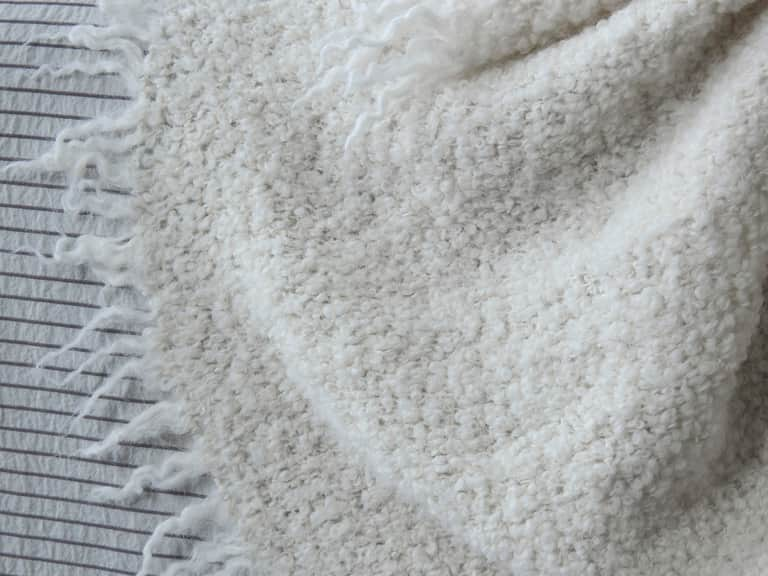
One of the most visible characteristics of a recycled-cotton textile may be variation. The Full Circle blanket is described as having subtle color differences created by recycled yarn. That variation can appear as gentle shifts in tone or a slightly irregular, blended quality across the surface. Instead of a perfectly identical field of color, the fabric may carry small changes that give it a relaxed, textured presence.
There is a material reason behind that effect. Recycled cotton may come from fibers with different histories, shades, and prior uses. Depending on how those fibers are sorted and processed, some variation can remain visible in the yarn and then in the woven cloth. The result is not necessarily a defect or a sign of poor consistency. It can be a characteristic of the material, much as grain patterns vary in wood or naturally occurring shade shifts appear in other fibers.
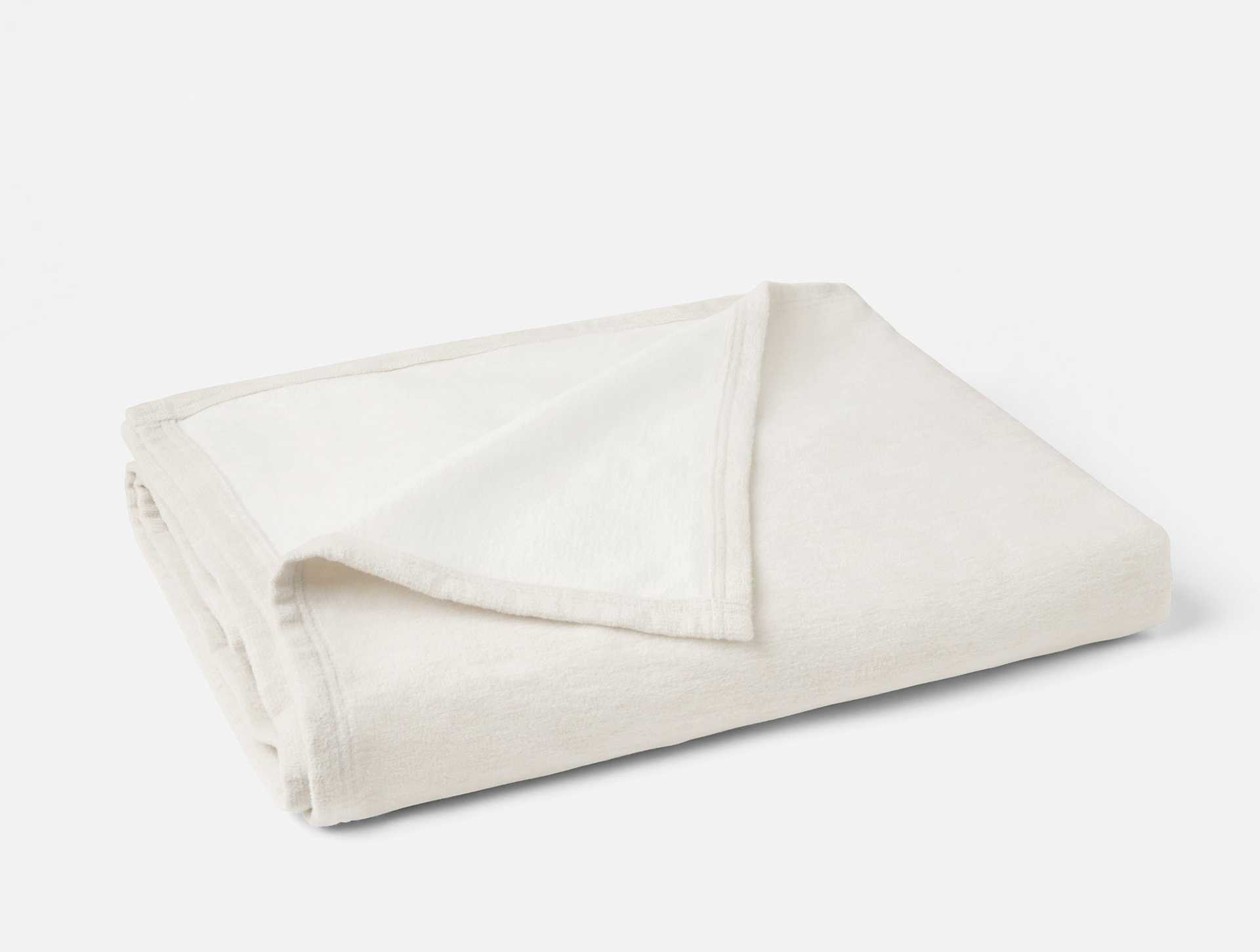
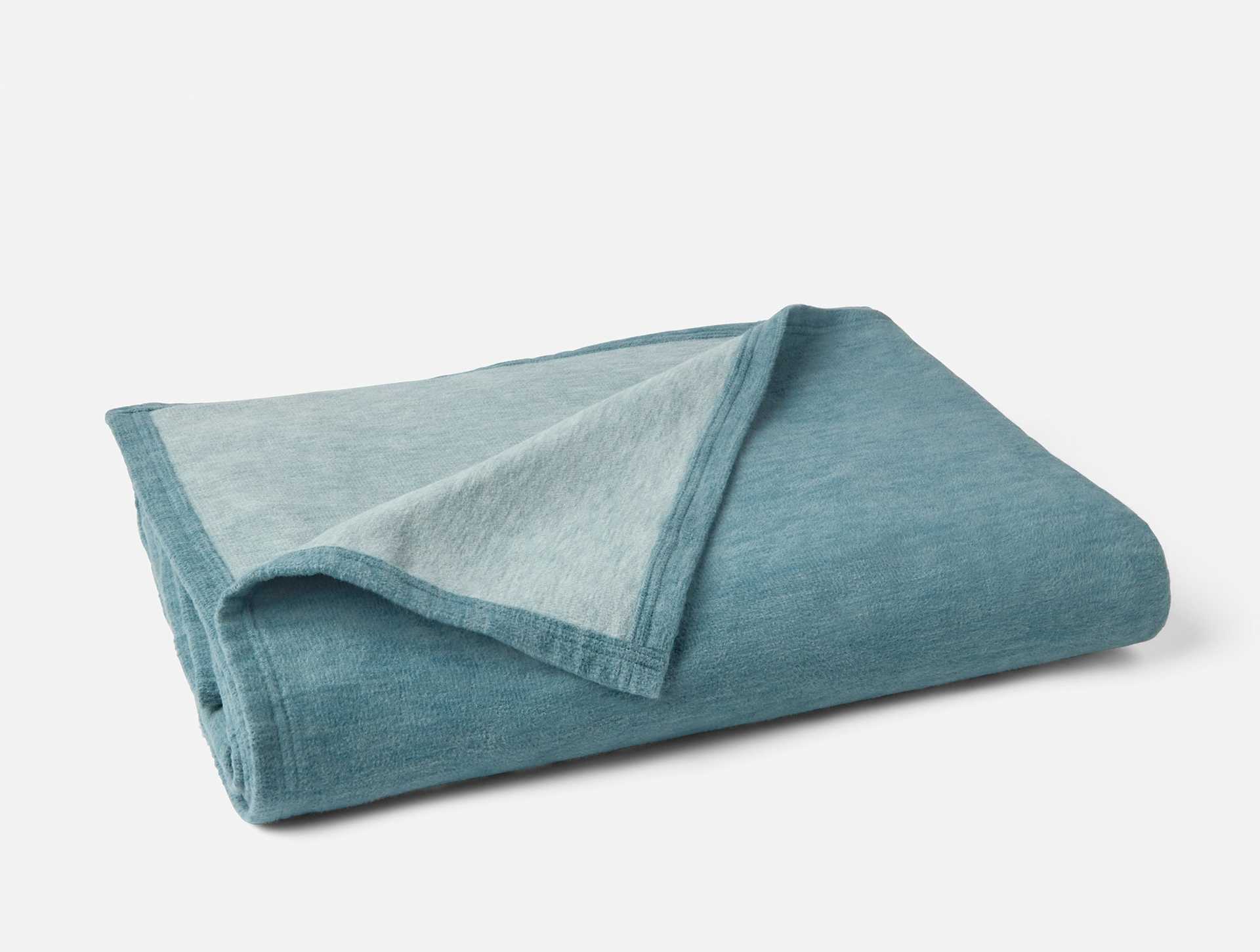
Variation is also an aesthetic choice. A gently blended palette can make a blanket feel less formal and easier to combine with bedding in related tones. The Full Circle blanket is offered in different colorways, including Mystic Blue and Ice Blue, as well as Oatmeal and Ivory. Recycled yarn can help lend such surfaces a nuanced appearance, though the exact visual effect will depend on the colorway and the finished fabric.
It is sensible to expect modest differences between individual pieces or production runs when the maker describes recycled-yarn variation. Screens, room lighting, and surrounding colors can also change how a textile appears. If precise color matching matters—for example, when coordinating a blanket with existing sheets—check the product’s current color details and remember that a photograph may not reproduce fabric tone exactly.
Texture is similarly shaped by more than fiber content. The Full Circle fabric is woven and brushed. Weaving interlaces yarns into a stable structure; brushing raises or softens the surface fibers, changing how the cloth feels to the hand. The described finish adds a soft, brushed character and a sense of warmth. It does not make the blanket a heavy winter textile by definition, nor does the material description alone establish a specific insulation rating. Layering and room temperature remain important to comfort.
The feel of a brushed blanket
When a fabric is brushed, its surface is gently raised to create a softer, sometimes slightly fuzzy hand. In a bedding layer, that finish can make the textile feel welcoming against the skin and add visual depth to the weave. The effect is tactile rather than merely decorative: light catches the raised fibers differently from a smooth, flat surface, and the cloth may feel warmer or more relaxed than an unbrushed weave of similar composition.
Brushing does not mean that a blanket should be handled as if it were fragile. The Full Circle product is described as oversized and intended to accommodate regular wash and wear. Its care instructions nevertheless recommend a cold wash on a gentle cycle, followed by low-heat tumble drying and prompt removal. Those directions are a useful middle ground: practical enough for routine upkeep, while avoiding unnecessary mechanical stress and high temperatures.
Over time, any brushed textile may change slightly with use and laundering. Surface fibers can settle, loosen, or become less pronounced. How much change occurs depends on the fabric and the conditions of care, including water temperature, detergent, agitation, drying heat, and friction from other items in the wash. Following the care label is the best way to support the fabric’s intended texture and continued usability.
A gentle-care routine for recycled cotton bedding
Care is where material choices meet daily habits. A blanket used on a bed or sofa collects dust, skin oils, and ordinary household soil. Washing removes that buildup, but every wash also exposes fabric to water, movement, detergent, and heat. The goal is not to avoid cleaning; it is to clean thoughtfully and according to the product’s instructions.
Before washing
Check the care label each time you are uncertain, especially if the blanket has been altered or paired with another textile. Shake it outdoors or over a laundry area to release loose dust, then inspect for a stain that may need localized attention. Close fasteners on items washed alongside it and avoid mixing the blanket with rough textiles that could create unnecessary abrasion. Because the Full Circle blanket is oversized, make sure the washer has enough room for the fabric to move freely. A crowded drum can prevent even cleaning and place excess strain on the cloth.
Wash cold and gently
The listed recommendation is a cold wash on a gentle cycle. Use a suitable detergent in a measured amount; more detergent does not necessarily mean cleaner fabric and may leave residue. Washing with like colors is also advised. These practices are especially helpful when a textile has nuanced tones or when you want to minimize color transfer from other laundry. Avoid adding bleach or harsh treatments unless the care instructions specifically permit them.
Cold water and a gentler cycle can reduce the severity of laundering compared with hot water and high agitation. They also make a straightforward routine easier to repeat. A blanket does not need an elaborate ritual to stay usable, but care that follows the maker’s directions can help preserve its surface, shape, and appearance.
Dry with low heat
The product information recommends tumble drying on low and removing the blanket promptly. High heat can be hard on cotton textiles, particularly when exposure is repeated. Low heat offers a more measured approach; prompt removal helps reduce prolonged tumbling and may make creases easier to smooth. If the blanket is still damp, allow it to finish drying before folding or storing it. A textile put away while damp can develop an unpleasant odor, so make sure it is dry throughout.
Smooth and store with care
The care information notes that a warm iron may be used if desired. Ironing is optional: a softly relaxed surface may suit the blanket’s casual character, while a light press can help tidy it for a more tailored bed. Use care appropriate to cotton and test an inconspicuous area if you are unsure. When storing the blanket for a season, fold it clean and fully dry, and choose a dry, ventilated location rather than a damp space.
Care, durability, and the meaning of “everyday”
Durability is not a single property that can be guaranteed by a fiber name. It emerges from the yarn, weave, finishing, construction, frequency of use, and care. A blanket can be described as suitable for regular wash and wear, but its actual life at home will depend on how it is used and maintained. Keeping it away from rough surfaces, avoiding excessive heat, and washing it only when needed are small decisions that can reduce avoidable wear.
“Wash only when needed” does not mean ignoring hygiene. It means letting use guide the schedule rather than applying a fixed, frequent routine without regard to condition. A blanket used as a top layer may need laundering less often than one used daily by a pet or placed in a high-traffic area. Spot cleaning may be appropriate for a small mark, provided the care instructions and the nature of the stain allow it. For more substantial soil, follow the full wash guidance.
An oversized blanket has practical advantages: more coverage on a bed and flexibility as a shared layer. Its size also matters during laundry. Before washing, consider the machine’s capacity and the blanket’s weight when wet. If it cannot move freely, a larger machine may be more appropriate. Avoid forcing a bulky textile into a washer or dryer that is too small, since that can compromise cleaning and increase friction.
Recycled content does not automatically mean a textile is delicate, and it does not remove the need for care. The Full Circle blanket is designed for regular use, with a machine-washable care profile. The useful conclusion is measured: its construction and instructions present it as an everyday layer, while gentle laundering is a reasonable way to help preserve its appearance and handfeel.
What circular sourcing means at home
In a bedroom, the circular economy can sound distant—an idea associated with manufacturing systems, collection programs, and supply chains. A recycled-cotton blanket brings that idea into a familiar object. The textile’s material composition signals that some cotton has been recovered and put to another use, while its role remains straightforward: provide a comfortable layer that can be cared for and used over time.
That does not mean one blanket resolves the broader environmental effects of textile production. Fiber recovery is one part of a complicated system that also involves farming, processing, dyeing, manufacturing, transport, use, and end-of-life options. A product description can identify particular materials and production details, but it cannot answer every question about impact. Careful reading is valuable precisely because it keeps claims specific rather than turning a single feature into a sweeping promise.
For this product, the available details include a blend of 52 percent recycled Coyuchi cotton and 48 percent organic cotton, weaving in Germany, a brushed finish, machine-wash guidance, and GRS certification. Those are concrete points to consider. They help distinguish the blanket from one made entirely of conventional virgin cotton, while leaving room for consumers to seek more information about sourcing, certification scope, and the program behind the reclaimed fiber when those questions matter to them.
Long use also belongs in the conversation. Choosing a textile that suits a household’s climate and habits, caring for it appropriately, and repairing or reusing it where possible can all contribute to keeping it in service. Recycled content is a material input; thoughtful use is an ongoing practice.
Choosing a recycled cotton blanket
A useful bedding choice begins with the job the blanket needs to do. Is it an extra layer on a bed, a coverlet for mild weather, or a throw for a chair? Will it be used every day or brought out seasonally? The Full Circle blanket’s brushed surface and cotton blend suggest a versatile textile, but personal comfort, room temperature, and bedding layers determine whether it is warm enough for a particular sleeper.
- Read the fiber percentages. The Full Circle blend contains 52 percent recycled cotton and 48 percent organic cotton. This gives a clear account of the stated composition without implying that every aspect of the textile is defined by fiber content alone.
- Consider the finish. A brushed surface has a softer, more textured hand than a very smooth finish. If you prefer a crisp, cool-feeling layer, compare the tactile description with your own preferences.
- Look for construction and origin details. The blanket is woven in Germany. Weave and finishing shape the fabric’s feel and appearance, while origin details help describe where part of its production takes place.
- Check care before buying. Cold, gentle washing and low-heat tumble drying are manageable for many households, but available machine capacity and laundry habits should be considered.
- Think about color variation. Recycled yarn is described as contributing subtle tonal differences. That character may be appealing if you like a softly varied surface; it may be less suitable if you need an exact, uniform color match.
- Match the size to the use. An oversized blanket can offer generous coverage, but it also requires enough room in the washer and dryer for effective, gentle care.
Those considerations apply whether the blanket is used as a top layer, folded across the foot of a bed, or kept close at hand on a sofa. The most sustainable textile is not simply the one with a compelling material story; it is also one that fits its owner’s life well enough to be used consistently and cared for rather than quickly replaced.
A closer look at the Full Circle Recycled Cotton Blanket
The Coyuchi Full Circle Recycled Cotton Blanket is made with 52 percent recycled cotton from Coyuchi’s 2nd Home program and 48 percent organic cotton. It is woven in Germany and finished with a soft brushing. The product description notes that recycled yarn creates subtle color variation, giving the surface a lived-in quality rather than an entirely uniform appearance.
The blanket is described as oversized and suited to regular wash and wear. Its care instructions call for a cold wash on a gentle cycle with like colors, low-heat tumble drying, and prompt removal. A warm iron may be used if desired. The available product information also identifies the blanket as GRS certified. Together, these details offer a clear picture of the material blend, the fabric finish, and the basic maintenance routine without asking the buyer to infer more than the stated information supports.
Its appeal is both tactile and material-minded: a cotton layer with a brushed hand, a relaxed surface, and a share of reclaimed fiber. In a home, those qualities are encountered in ordinary moments—pulling a blanket over cool sheets, folding it after breakfast, or washing it when a season of use has left its mark. Circularity becomes tangible not as an abstract slogan, but as a question of how materials are chosen, used, and cared for across time.
The lasting value of a well-used layer
Textiles are shaped by countless decisions made before and after they reach a home. Recycled cotton makes one part of that chain visible: fibers can move beyond their first product and become ingredients in another. In the Full Circle blanket, recycled and organic cotton meet in a woven fabric whose color variation and brushed finish give it a distinct character.
The practical story is just as important. A blanket earns its place through comfort, useful coverage, and care that fits everyday life. Gentle washing, low-heat drying, and attention to the label help support the fabric over repeated use. They cannot promise that a textile will last forever, but they can help avoid needless stress on a material designed to be lived with.
For anyone exploring recycled cotton bedding, the lesson is to look at the whole textile: what it is made from, how it is constructed, what its surface feels like, and how it should be maintained. A circular fiber story gains meaning when it is paired with an object that is useful enough to keep in rotation—and when the habits around it help that useful life continue.